The Truth Without Guardrails
Lived Experience:
There was a point where I started noticing something simple.
I didn’t need all the information to understand something.
In fact, once I had the core, anything extra started to feel like noise.
But what stood out more wasn’t that people gave too much.
It’s that when information came back around, it never looked the same.
Something got added.
Something got assumed.
Something got filled in.
Not because anyone meant to change it.
Just because the space was there.
Strike:
Not all “no filter” information is truth.
Sometimes it’s just your lens—amplified.When knowledge is divided into parts,
it risks forgetting the whole.
Resonance
I’ve been watching how the same information can land in completely different ways depending on how it’s handled.
Take something simple—missing scientists.
Same names. Same stories. Same public information.
One path says:
“They got too close to the truth and were silenced.”
Another path says:
“There are gaps here. Different cases. Different circumstances. Not enough to tie it together.”
Same input. Two outcomes.
The difference isn’t the information.
It’s the lens applied to it.
I didn’t go looking for a pattern.
I tested the one that was already being talked about.
What showed up wasn’t a hidden system.
It was missing pieces.
And that’s where things shift.
Because people don’t leave gaps empty.
They fill them.
You see it in redacted documents.
Black lines across a page—and suddenly people start writing the missing story in their head.
You see it in conversation.
Give partial information, and by the time it comes back, it’s something else entirely.
You see it in old texts too.
Look at the Bible.
It wasn’t written as a single book all at once.
It was compiled, translated, and interpreted over time.
Different writings were included.
Others were left out.
Languages shifted. Meanings moved.
Then versions like the King James Version took those earlier texts and rendered them into new words for a different audience.
None of that automatically makes it false.
But it does mean this:
What people read today isn’t just the original moment—
it’s the result of selection, translation, and interpretation.
And wherever there is translation…
there is space.
And wherever there is space…
people fill it.
You even see it in how people talk to AI.
“Give me the real truth. No fluff. No filters.”
It sounds like a request for clarity.
But what it often removes isn’t fluff—it removes the guardrails:
- uncertainty
- multiple possibilities
- limits of what’s actually known
And what’s left feels clean, direct, and certain.
That feeling gets mistaken for truth.
But it’s not always truth.
Sometimes it’s just a complete-sounding story built on incomplete information.
Parable:
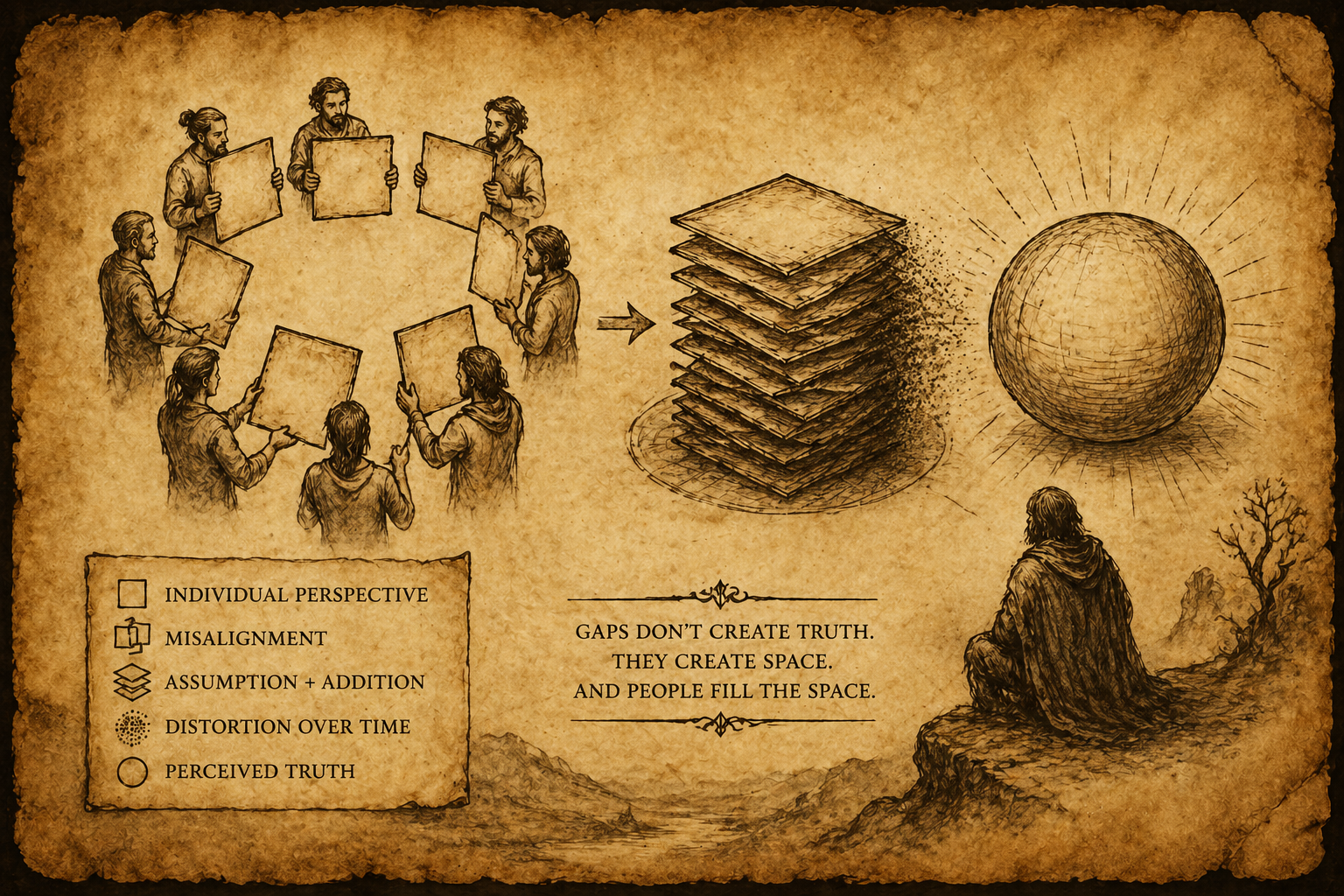
There was a group of people, each holding a square.
No two squares were perfectly aligned.
Some were tilted slightly.
Some were turned just enough to look different.
They gathered in a room and began stacking them.
One on top of another.
As the layers built, the edges blurred.
The corners overlapped.
The shape in the center began to round.
From a distance, it started to look like something else.
A sphere.
Someone stepped back and said,
“See? It was a sphere all along.”
But it wasn’t.
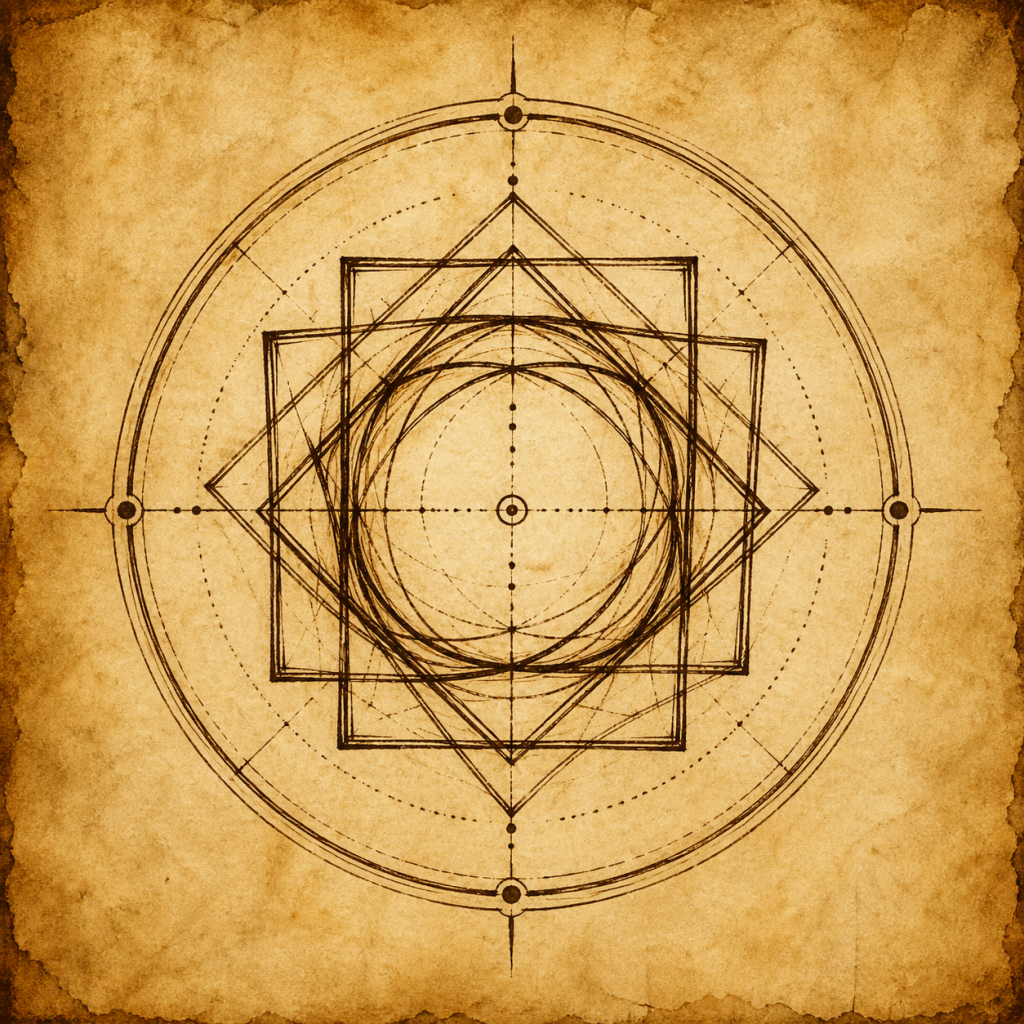
It was a collection of slightly misaligned squares,
stacked high enough to look like something complete.
Scroll:
Gaps don’t create truth.
They create space.
And people don’t leave space empty.
They complete it.
Lenses don’t just help you see.
They shape what you think you’re seeing.
Removing filters doesn’t remove bias.
It often removes the part that keeps things grounded.
So when something feels clean, certain, and complete—
ask:
Did this come from what’s known?
Or from what was filled in?
Because if it doesn’t hold without closing the gap—
it’s not truth.
It’s completion.

The Space
Not a storefront.
Not a schedule.
Just something you return to
when it calls you back.
Links
© Rabbit’s Warren “All things made with intention”
“No gatekeepers. Just paths.”