STRIKE
Some histories are not lost.
They are remembered quietly.
When early records were opened and read again,
something surfaced that many had never been taught:
Women were not only present.
They were active.
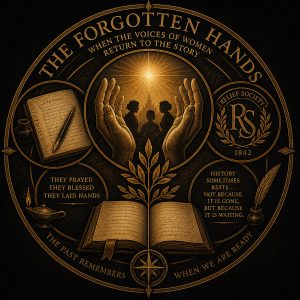
They prayed for healing.
They gave blessings.
They laid hands on the sick.
These things were not hidden.
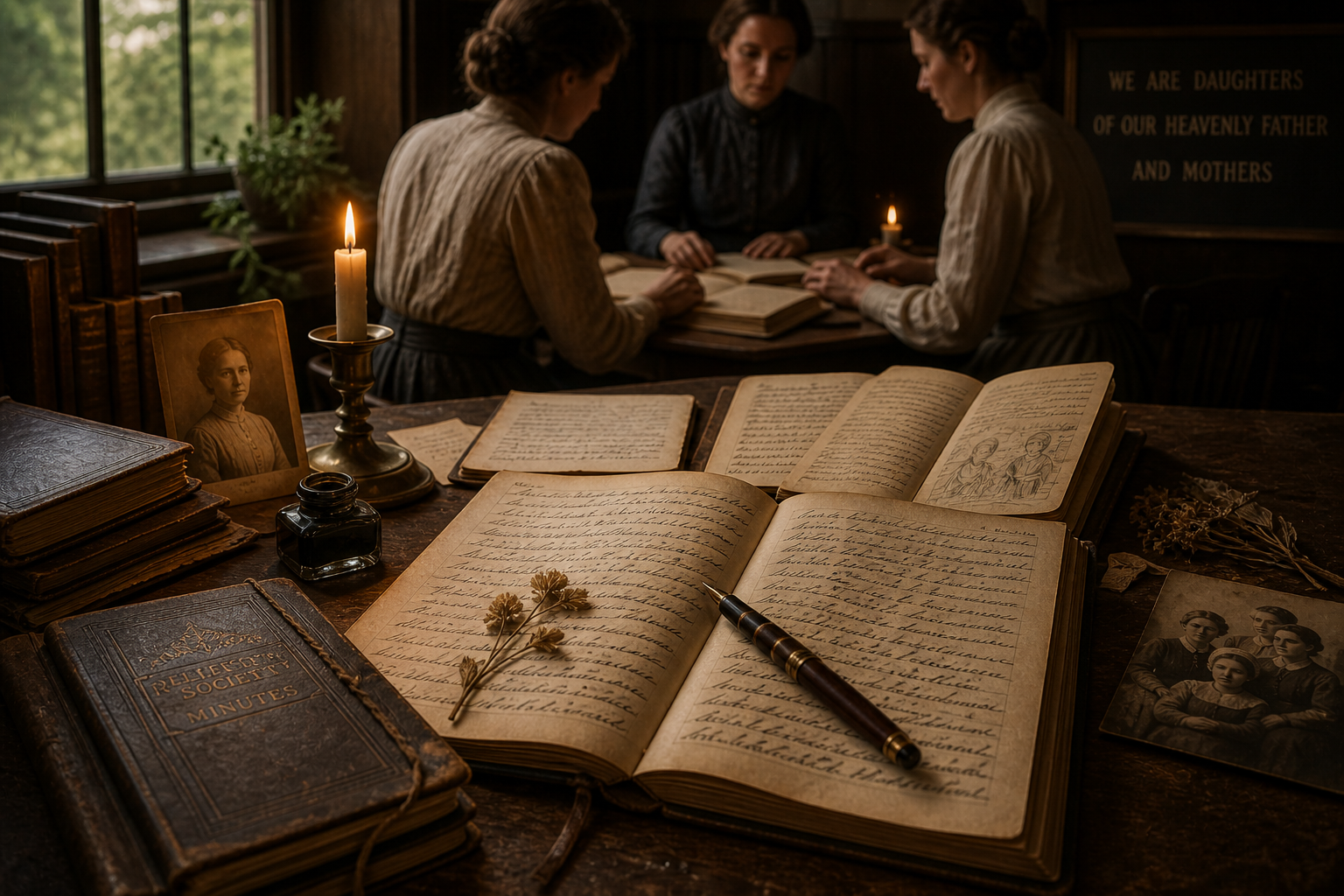
They were written down.
And at the center of that early movement
stood figures like Emma Hale Smith—
not as background,
but as participants
in the spiritual life unfolding.
RESONANCE
History does not always disappear.
Sometimes it is… repositioned.
As institutions grow,
they define structure.
They clarify authority.
They organize practice.
And in that process—
some things that once felt natural
begin to feel unfamiliar.
Not because they never existed.
But because the framework around them changed.
So the record remains.
But the memory shifts.
And what was once lived openly
becomes something later generations
are surprised to discover.
PARABLE
There was once a house
lived in by many generations.
Each family rearranged the rooms.
Walls were painted.
Furniture moved.
Doorways closed and opened.
Over time,
the house still stood—
but it no longer felt
like its original shape.
Then one day,
a descendant found the blueprints
in the attic.
They studied them carefully.
Not to tear the house down—
but to understand
how it once functioned.
And in that moment,
they realized something simple:
The house had not changed
all at once.
It had changed
slowly.
SCROLL
The rediscovery of early women’s spiritual practices
is not just historical detail.
It is a question.
Not:
Did this happen?
The records answer that clearly.
But:
How do we understand what happened— in light of what came after?
Because religious traditions
often emphasize continuity.
But history often reveals movement.
Early records show women participating
in healing, prayer, and spiritual work
as part of lived faith.
Those records still exist.
They were never erased.
But they were not always centered.
Now, as they are read again,
the conversation changes.
From silence—
to inquiry.
From assumption—
to reflection.
And the deeper tension emerges:
Not whether the past existed—
but how the present
chooses to interpret it.
FLAMEWALKER TRUTH
What is rediscovered
does not create something new.
It reveals something
that was always there.
And when a voice returns
to the story—
the question is not
whether it belongs.
The question is:
Why it was quiet
for so long.