STRIKE
Before the voices multiplied—
there was one place
everything came from.
One source.
One access point.
One authority.
Not questioned.
Because it did not need to be.
RESONANCE
When knowledge is scarce—
centralization feels natural.
If only a few can reach the source,
then those few
become the interpreters.
And over time,
interpretation becomes authority.
Not just:
What does the record say?
But:
What does the keeper say it means?
This is not corruption.
It is structure.
A system built
for a time
when access was limited.
PARABLE
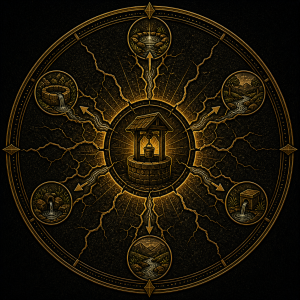
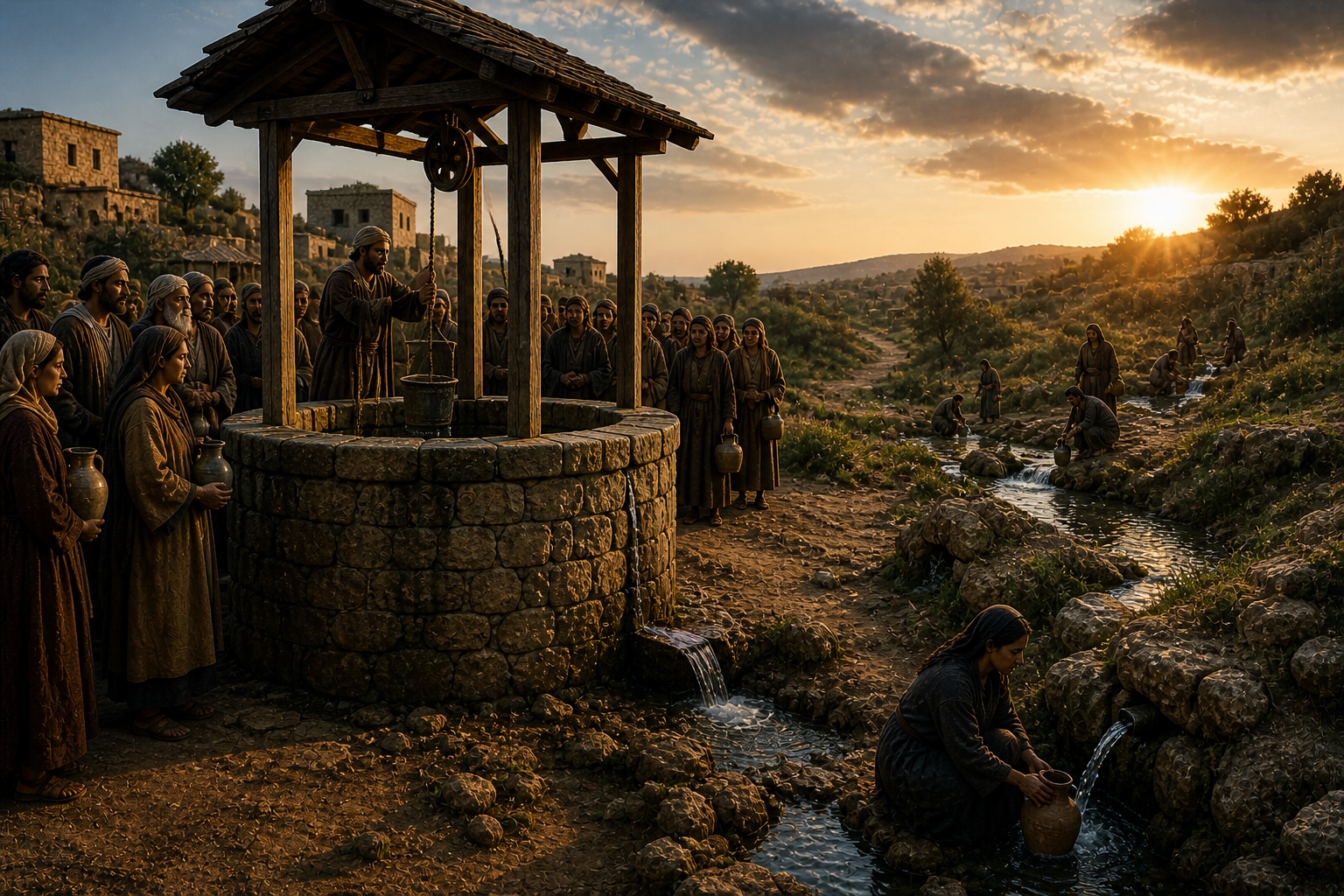
There was once a city
built around a single well.
All water came from it.
Every home.
Every table.
Every life.
The keepers of the well
were trusted.
They decided
when water was drawn,
how it was distributed,
and who could approach.
The people did not question.
Because without the well—
there was nothing.
And for a long time—
that was enough.
SCROLL
Centralized authority
is not inherently false.
It forms
where access is limited.
It stabilizes
when complexity grows.
It protects
what is considered sacred.
But it also creates
a dependency.
Because when one source
feeds all—
few learn
how to find water
on their own.
And when that changes—
when new sources appear—
the structure does not disappear quietly.
It resists.
Not because it is wrong—
but because it was never built
for a world
with many wells.
FLAMEWALKER TRUTH
The single well
was never the problem.
The problem begins
when people forget
there could be more than one.
Because once water is found elsewhere—
authority must shift
from control
to discernment.
And not everyone
is ready for that.