STRIKE
Not everything you were taught about the world
came from what was written.
Some of it came from
what was needed
to make everything else make sense.
RESONANCE
In Genesis,
the world is spoken into being.
Formed.
Ordered.
Named.
However the “days” are read—
the tone is clear:
The world was made
intentionally whole.
Then the frame shifts.
In later teachings—
creation is not from nothing—
but from something.
Matter already exists.
It is organized.
And that creates space.
Because if the world is organized—
where did the materials come from?
Then comes what people see:
fossils
bones
creatures that no longer exist
And the question rises:
How does that fit?
The text does not fully answer.
So something else steps in.
Over time—
through lessons,
conversations,
classrooms—
an explanation forms:
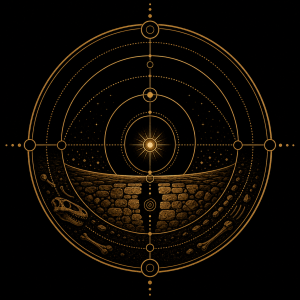
Maybe the earth was built
from pieces of other worlds.
Maybe those bones
came from somewhere else.
Not clearly written.
Not formally declared.
But taught.
Shared.
Repeated.
And once it is repeated enough—
it no longer feels like explanation.
It feels like origin.
But step back—
and you can see the layers:
Text.
Gap.
Explanation.
That’s where the pattern lives.
PARABLE
THE HOUSE WITH OLDER STONES
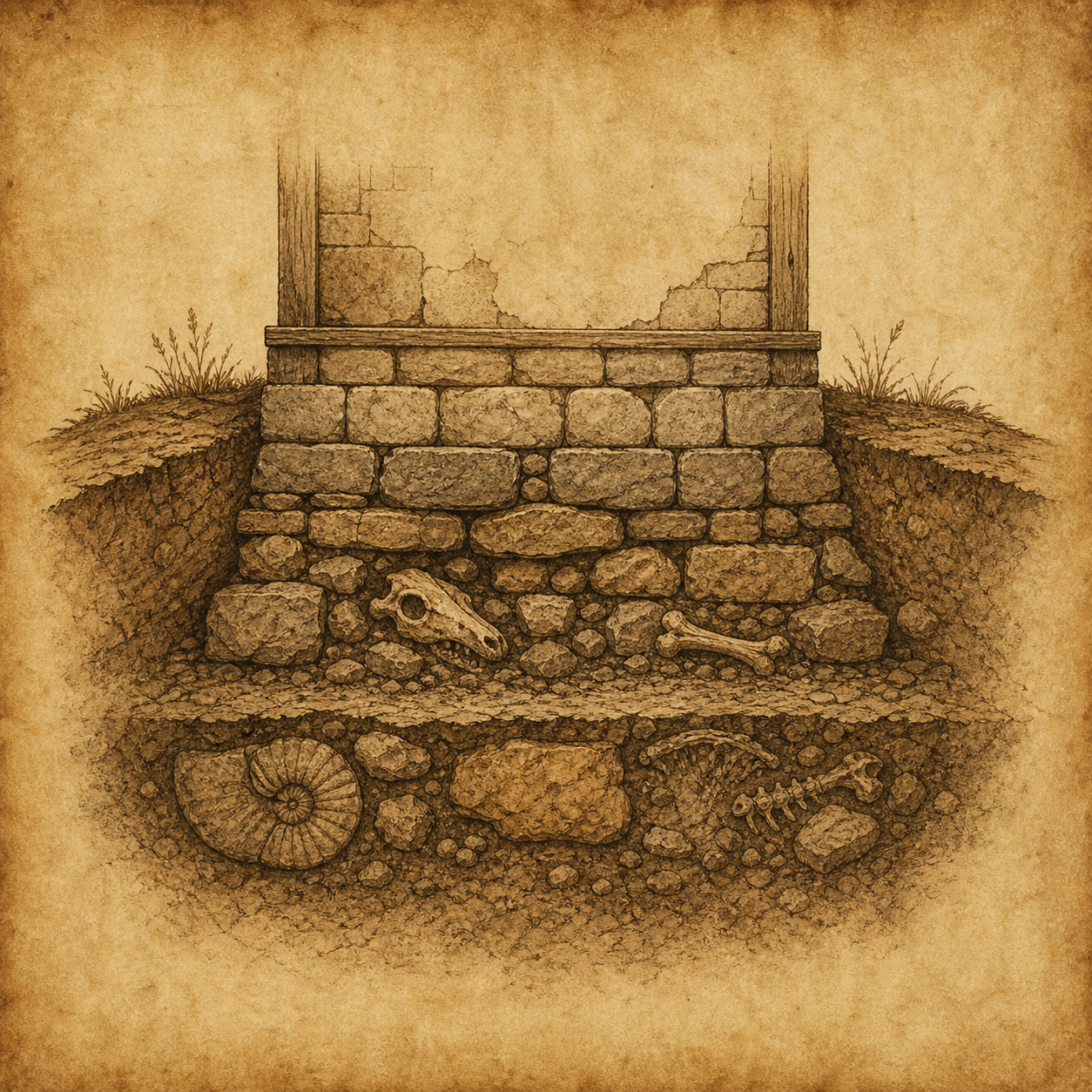
A builder handed down a house.
“This house was formed with care,”
he said.
And the people believed him.
But as they walked through it—
they noticed things that didn’t match.
Stones from another time.
Bones in the foundation.
Materials older than the structure.
So they asked:
“How can this be?”
The builder had not explained.
So the elders did.
“Perhaps these came from another house,”
they said.
“Perhaps this one was built
from what came before.”
The answer spread.
It helped the people rest.
It made the house feel complete again.
And over time—
no one remembered
where the explanation came from.
They only remembered
that it existed.
Until one day, someone asked:
“Did the builder say this—
or did we?”
And the room went quiet.
Not because the house was false—
but because something had been added
no one remembered adding.
SCROLL
This is not about rejecting the text.
It is about recognizing process.
Belief is not formed
from what is written alone.
It is formed from:
what is written
and what is added
when the writing leaves space.
Every system does this.
Every culture.
Every tradition.
When questions remain—
people build bridges.
Some bridges are careful.
Some are assumed.
Some are repeated so often
they begin to feel like the ground itself.
But a bridge
is still a bridge.
And once you see that—
you can separate:
what was said
from what was added
to complete it.
Not to tear it down—
but to see it clearly.
Because clarity
does not destroy meaning.
It refines it.
And once you can say:
“This part is text…
and this part is explanation…”
you begin to stand differently.
Not rejecting.
Not lost.
Aware.
FLAMEWALKER TRUTH
The world you were given
was not only created—
it was interpreted.
Not maliciously.
Not always consciously.
But inevitably.
Because people do not leave space empty.
If something is not explained—
we explain it.
If something does not connect—
we connect it.
If something feels incomplete—
we complete it.
And over time—
those completions
become indistinguishable
from the original.
That is how belief deepens.
But it is also how it blurs.
So the real question is not:
“Is this right or wrong?”
The real question is:
Where did this part come from?
Was it written?
Was it reasoned?
Was it passed through culture?
Was it repeated
until it felt original?
Because once you can ask that—
without fear—
you begin to see again.
Not less.
More.
You can hold the text
without confusing it
with everything built around it.
And that does not weaken faith.
It strengthens sight.
Because truth does not depend
on additions being hidden.
It can stand
even when the layers are seen.
And the moment you recognize
what was written
and what was added—
is the moment you stop inheriting belief—
and start understanding it.