STRIKE
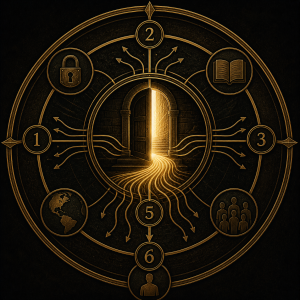
The door did not break.
It opened.
Not all at once.
Not with noise.
But slowly—
until the space
that once held everything
could no longer contain it.
RESONANCE
Access did not arrive
as permission.
It arrived as possibility.
Records began to move.
A page scanned.
A letter shared.
A journal uploaded.
What once required presence—
now required only connection.
The distance
between the archive
and the reader—
collapsed.
And with that collapse,
something shifted:
The story
was no longer carried
only by those inside the room.
It began to flow.
PARABLE
There was once a chamber
with a single door.
Inside,
the records remained.
For years,
entry required a key.
And those without one
stood outside—
listening
to what was brought out.
Then one day,
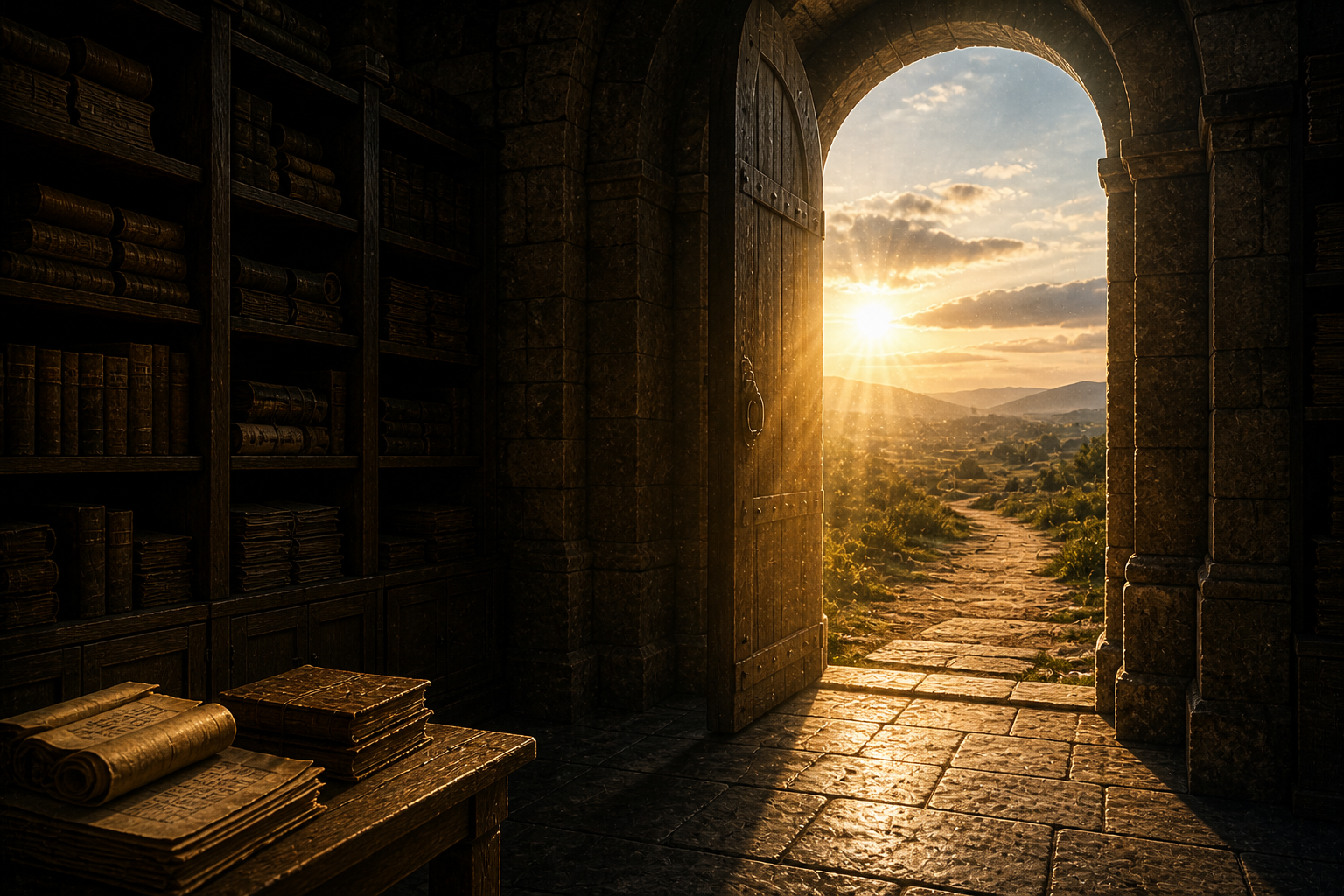
the door was left slightly open.
Not wide.
Just enough
for light to pass through.
Someone noticed.
Then another.
At first,
they only looked.
Then one stepped closer.
Then one stepped in.
And after that—
the chamber was never
only a chamber again.
SCROLL
The opening of access
does not destroy the archive.
It transforms it.
Because once a record
can be reached—
it can be read.
And once it is read—
it can be interpreted.
Not by one voice—
but by many.
This is where the shift begins.
Not in the content of history—
but in its movement.
From stillness
to flow.
From containment
to circulation.
And with that movement
comes both clarity
and distortion.
Because access
does not filter.
It reveals.
FLAMEWALKER TRUTH
The opening is not the end.
It is the beginning
of responsibility.
Because once the door opens—
you are no longer
only a listener.
You are a reader.
And what you see
will no longer depend
on who told you—
but on how
you are willing to look