STRIKE
The door opened.
The records moved.
And something else happened—
people began to speak.
RESONANCE
At first,
access creates readers.
But it does not stop there.
Because once a person reads—
they interpret.
And once they interpret—
they respond.
A thought shared.
A question asked.
A connection made.
The quiet reader
becomes a voice.
And when enough voices rise—
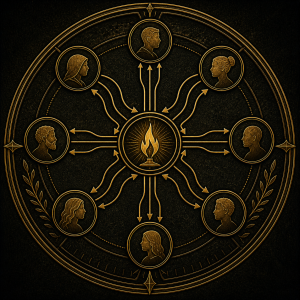
the story
is no longer told
from one direction.
It becomes a conversation.
PARABLE
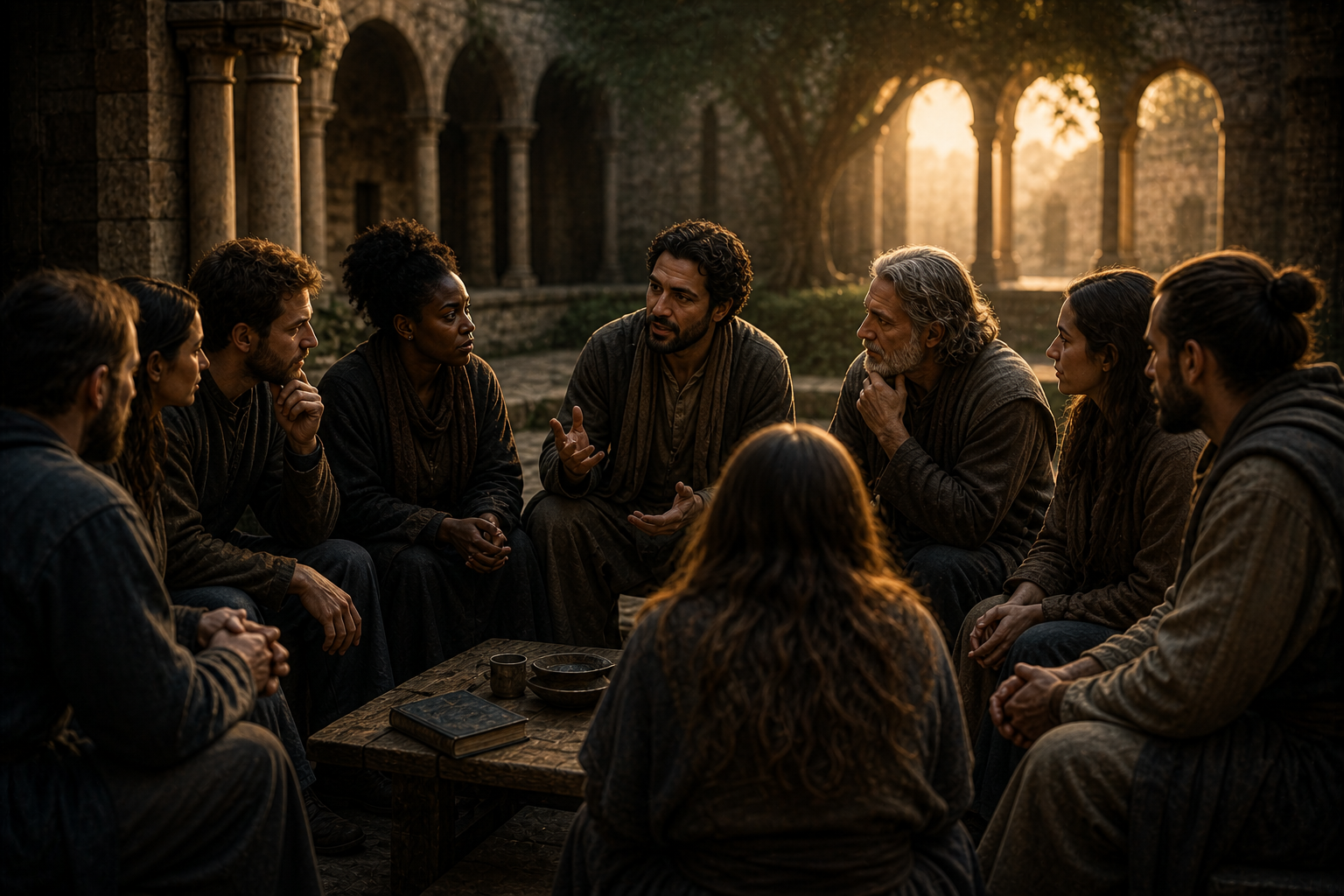
There was once a gathering
where a single voice
told the story.
The people listened.
They nodded.
They remembered.
They carried the words forward.
Then one day,
someone in the crowd
raised their hand.
Not to interrupt—
but to add.
A detail they had seen.
A question they could not ignore.
A perspective
no one had spoken aloud.
At first,
the room grew quiet.
Because the story
had always moved
in one direction.
But then—
another voice followed.
And another.
Until the gathering
was no longer listening—
It was speaking.
SCROLL
This is where history
becomes participatory.
Not because authority disappears—
but because presence expands.
More readers
means more interpretation.
More interpretation
means more tension.
Because voices do not always agree.
Some bring clarity.
Some bring confusion.
Some bring truth.
Some bring distortion.
But all of them reveal
the same shift:
The story
is no longer held
in one voice.
It now moves
through many.
And once that happens—
the responsibility changes.
No longer:
What was I told?
But:
What do I see?
FLAMEWALKER TRUTH
A voice is not awakened
when it repeats.
It is awakened
when it engages.
Because once you speak
into the story—
you are no longer
outside it.
You are part of
how it moves.
And that means:
The question is no longer
whether you were taught correctly.
It is whether you are willing
to see clearly
before you speak.