
THE MANUFACTURED FLAME
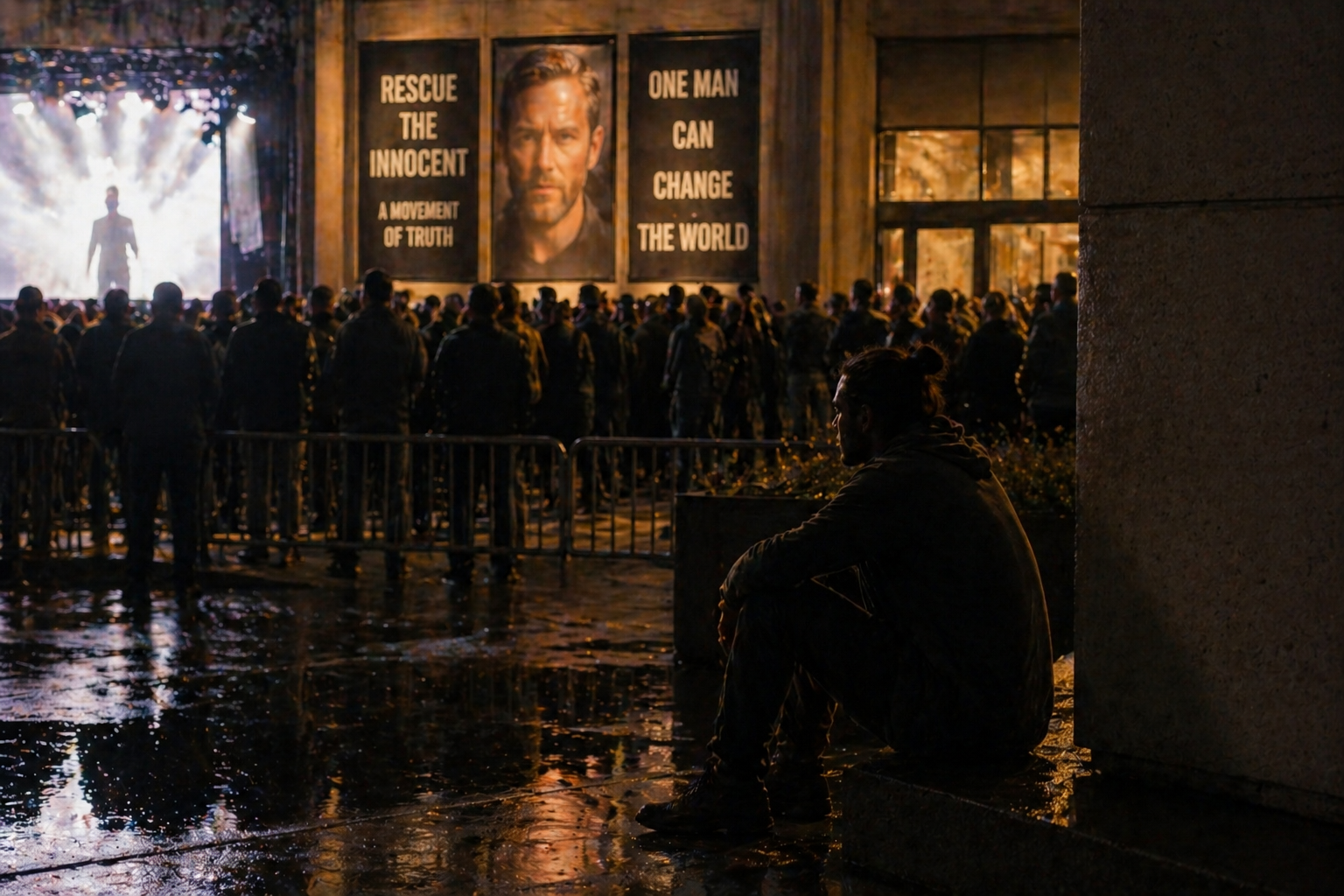
Lived Experience:
I’ve seen this pattern before.
Not on a stage.
Not in headlines.
In rooms most people never see.
Systems that needed a face.
A voice.
A figure strong enough to carry belief
so the structure behind it wouldn’t be questioned.
I’ve worked inside those systems.
Watched how performance gets mistaken for truth.
How confidence gets mistaken for clarity.
How urgency gets used to bypass discernment.
And I’ve felt what happens
when you don’t go along with it.
You’re not debated.
You’re dismissed.
Reframed.
Rewritten.
Not because you were wrong—
but because you didn’t fit the narrative being built.
That’s when I started paying attention.
Not to the person being elevated—
but to the system doing the elevating.
Strike:
If a flame needs an audience to exist—
it isn’t truth
Resonance
Real fire doesn’t perform.
It burns whether you’re watching or not.
But manufactured flame—
needs timing.
Needs framing.
Needs belief to survive.
And the more it is protected,
the less it can be questioned.
Parable:
THE VILLAGE OF BORROWED FIRE:
There was once a village that feared the dark.
Not because they had no light—
but because they had forgotten how to tend it.
So when a man arrived carrying a torch,
they gathered.
He spoke of danger.
Of enemies in the distance.
Of threats only he could see clearly.
And the people listened.
Because his flame was bright.
Because his voice was certain.
Because he gave them something to believe in
without asking them to look within.
So they built around him.
Gave him a platform.
A story.
A name that grew larger than the flame he carried.
And over time,
they stopped noticing something:
The fire never changed.
It never deepened.
Never softened.
Never adapted.
It only intensified
when eyes were on it.
And one day,
someone stepped back.
Not in rebellion—
in quiet observation.
They noticed the flame flickered
when the crowd thinned.
They noticed it needed constant feeding—
not of wood,
but of attention.
And in that moment,
they realized:
The flame wasn’t alive.
It was maintained.
So they turned away.
Not to darkness—
but to their own unlit hands.
And in the stillness,
something small appeared.
A spark.
Not loud.
Not seen.
But real.
And unlike the torch in the center of the village—
this one didn’t need to be believed in.
It simply was.
Scroll:
The system does not create truth.
It creates figures.
Figures that can carry urgency.
Emotion.
Identity.
Because people respond faster to a face
than to a pattern.
This is how manufactured flame works:
It wraps itself in purpose.
Aligns itself with something sacred.
And then builds a narrative strong enough
that questioning it feels like betrayal.
Not of the person—
but of the cause itself.
And that’s where the distortion happens.
Because truth does not need protection from inquiry.
Only performance does.
The moment something cannot be questioned
without consequence—
you are no longer dealing with truth.
You are dealing with structure.
And structure, when left unexamined,
will always choose preservation
over clarity.
This is not about rejecting action.
Or denying that real work is needed in the world.
It is about remembering:
The louder the flame is presented,
the more stillness is required to see it clearly.
Because real fire does not need to convince you.
It reveals itself
in how it moves when no one is watching.
FLAMEWALKER TRUTH:
Truth doesn’t need a figure to carry it—
only those willing to stand in it without being seen.

The Space
Not a storefront.
Not a schedule.
Just something you return to
when it calls you back.
Links
© Rabbit’s Warren “All things made with intention”
“No gatekeepers. Just paths.”