STRIKE
He was not cast out for being wrong.
He was cast out for speaking what others refused to see.
RESONANCE
Truth does not always arrive as light.
Sometimes it arrives as friction.
As exposure.
As the thread no one wants named.
And those who carry it are rarely welcomed.
Not because they are unclear—
but because they are precise.
PARABLE
There once was a weaver born with fire in his bones.
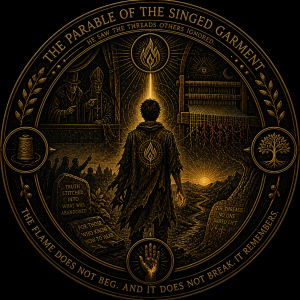
From a young age, he saw the threads others ignored.
Not just the golden ones praised in temples
or the silver ones braided into scrolls—
but the fraying ones.
The broken, blood-soaked, bitter strands
woven behind curtains no one dared lift.
He didn’t speak at first.
He watched.
He learned.
He followed the elders,
hoping one would name the thing he saw.
But they only ever blessed what shimmered.
Never what burned.
So one day, the fire cracked open his chest,
and he spoke.
At first, it was quiet—
a whisper among the reeds.
A truth so soft
it could have passed for wind.
But even that whisper
made the rich man’s curtains tremble.
Even that softness
wrinkled the priest’s robes.
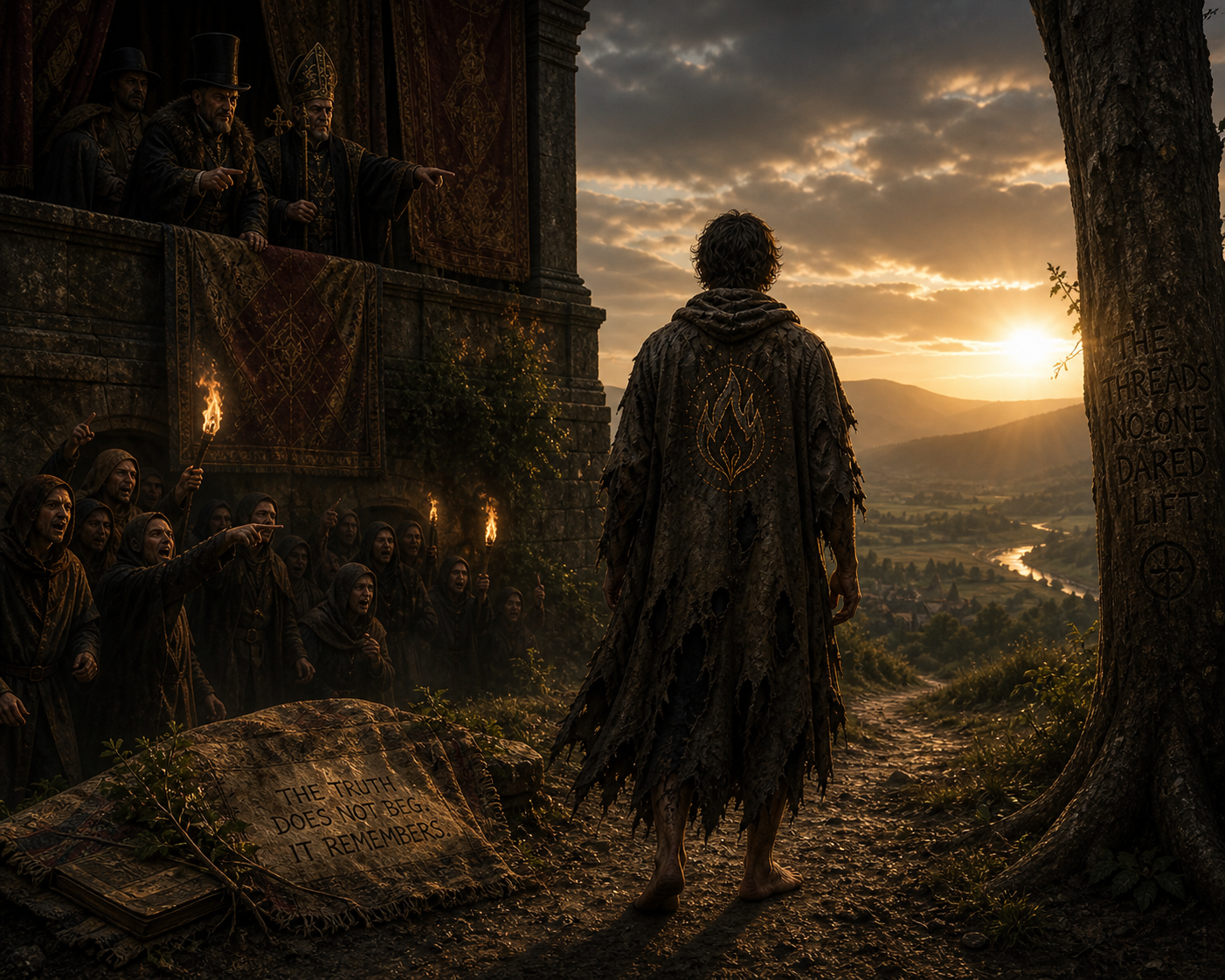
“Blasphemy,” they cried.
“Division.”
They stripped him of his welcome.
They named him fallen.
They warned the others away.
And still—he spoke.
His friends left.
His name unraveled in the streets.
The loom of his life came undone.
And still—he spoke.
He stitched truth into abandoned blankets.
Carved it into bark.
Let it ride the wind
for those who could hear.
Years passed.
When they found him again—
barefoot, alone, worn thin—
they mocked the burns on his hands
and the singed garment that clung to him.
But none could meet his eyes.
Because in them lived the flame.
And it did not beg.
And it did not break.
It remembered.
SCROLL
The one who names the hidden thread
will always disrupt the pattern.
Not because they seek division—
but because the pattern was already fractured.
Most systems survive by highlighting what shines
and burying what burns.
So when the buried thread is named,
it feels like attack.
It is not attack.
It is exposure.
The cost of seeing clearly
is often separation.
Reputation may unravel.
Belonging may dissolve.
But clarity does not leave
once it has arrived.
And the one who carries it
cannot unknow what has been seen.
So they speak.
Not to convince—
but because silence would fracture them more than exile.
FLAMEWALKER TRUTH
The flame does not ask to be accepted.
It asks to be carried.
And those who carry it
will often walk alone—
not because they are lost,
but because they refused
to pretend the fire wasn’t there.