
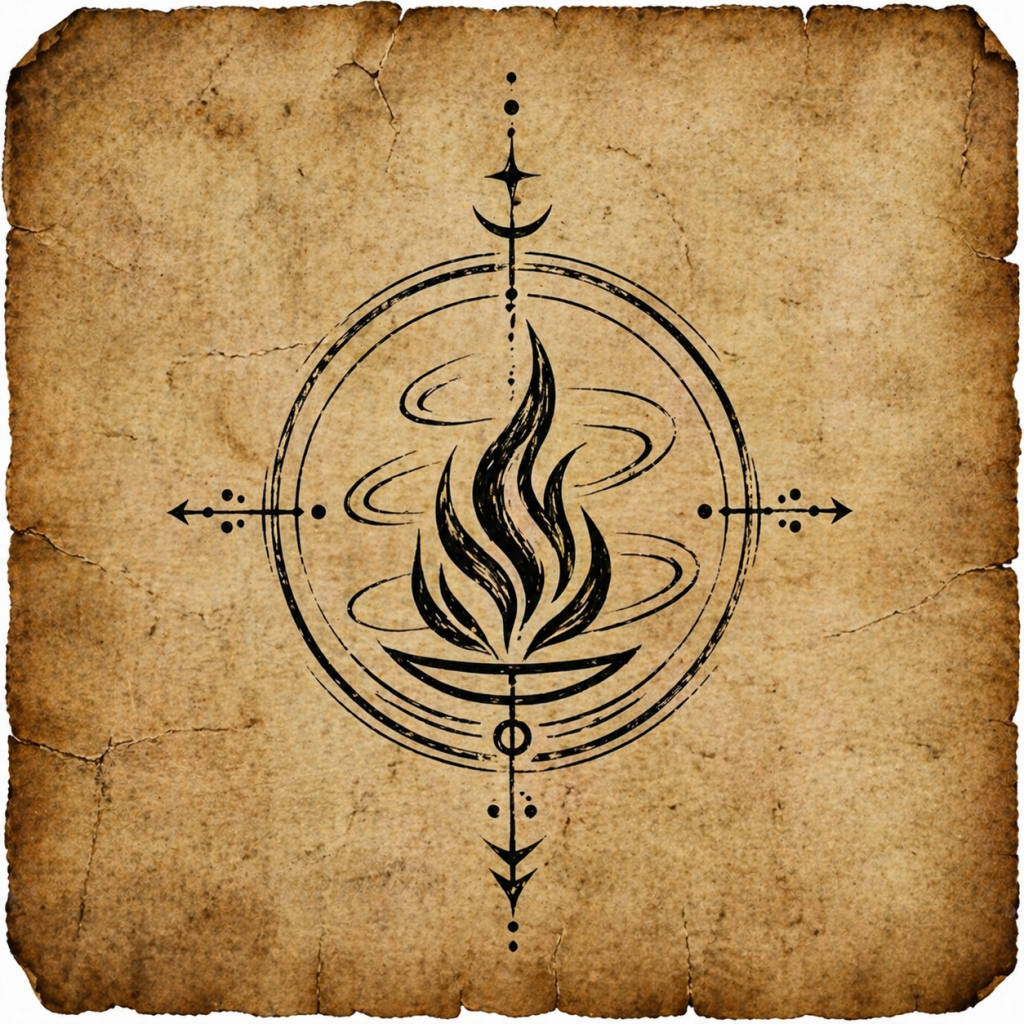
The Still Flame

Lived Experience:
There was a time I thought my flame needed protection.
Every shift in energy—
every loud room, every demand, every moment of overwhelm—
felt like something that could put it out.
So I tightened.
Controlled my environment.
Controlled my reactions.
Controlled my breath.
Tried to keep everything steady
so I wouldn’t lose what I felt inside.
But the tighter I held it,
the more it flickered.
Not because the flame was weak—
but because I was trying to control something
that was never meant to be contained.
And it showed up most clearly in overstimulation.
Too much noise.
Too many inputs.
Too many expectations hitting at once.
That’s when I would call myself unstable.
Inconsistent.
Too much.
But over time, something shifted.
Not in the world.
In how I responded to it.
I stopped trying to eliminate the movement.
And started allowing it.
Strike:
A steady flame is not one that never moves—
it’s one that doesn’t go out when it does.
Resonance
The flame doesn’t resist the wind.
It adjusts.
Not by force—
by nature.
The more you try to hold it still,
the more unstable it becomes.
The more you allow it to move,
the more it stabilizes itself.
Parable:
THE LANTERN IN THE STORM
There was once a woman walking through a storm
with a lantern in her hand.
Every gust of wind made her tighten her grip.
She cupped her hands around the flame,
shielded it, protected it,
fought to keep it steady.
But the harder she tried,
the more it sputtered.
Until finally—
she stopped.
Not in defeat.
In realization.
She lowered her hands.
Let the wind move through.
And something unexpected happened.
The flame didn’t go out.
It steadied.
Not because the storm ended—
but because she stopped fighting it.
And from that moment on,
she walked differently.
Not guarding the light.
Carrying it.
Scroll:
Stability is often misunderstood.
It’s not stillness.
It’s not silence.
And it’s not the absence of movement.
True steadiness comes from allowing movement
without losing center.
This is especially true in overstimulation.
The instinct is to shut it down.
Control it.
Label it as failure.
But overstimulation is not weakness.
It is sensitivity without regulation.
And regulation doesn’t come from suppression.
It comes from relationship.
The moment you stop fighting the movement—
you begin to understand it.
The moment you stop calling it instability—
you begin to see its rhythm.
The flame was never fragile.
It was responding.
And once you stop trying to hold it still,
you realize:
It already knows how to remain.
FLAMEWALKER TRUTH:
Your flame doesn’t need protection from the world—
it needs permission to move within it.
The Space
Not a storefront.
Not a schedule.
Just something you return to
when it calls you back.
Links
© Rabbit’s Warren “All things made with intention”
“No gatekeepers. Just paths.”